Language:




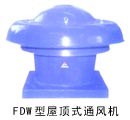
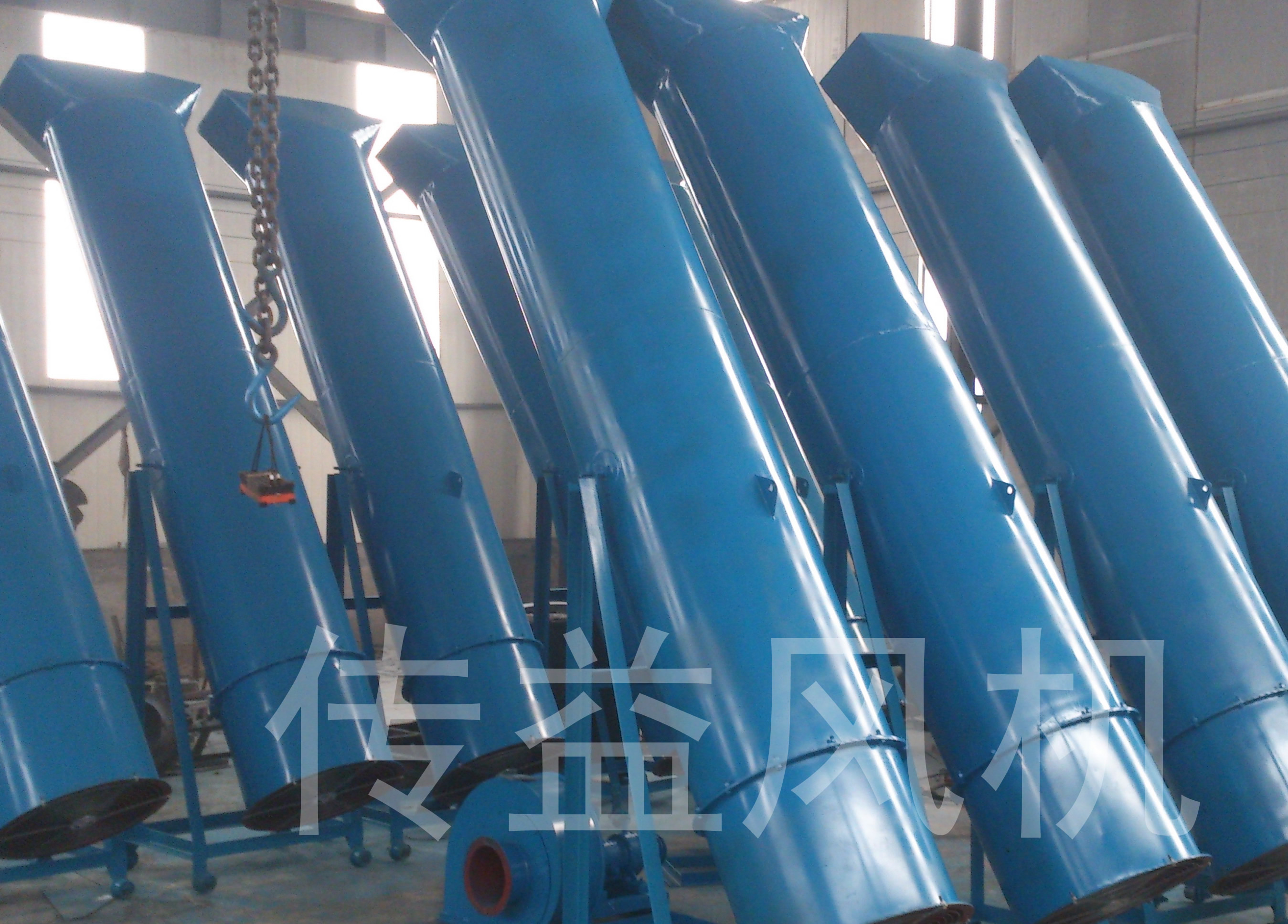
When the medium is corrosive and flammable at the same time the two requirements often conflict: corrosion resistant non-metallic materials do not conduct, so they can accumulate static, while metal materials with good conductivity may be attacked by the medium. The solution is to give non-metallic parts conductive treatment and a reliable earth.
Corrosion resistance sets the material and explosion protection sets the motor and static control, and both have to be resolved on the same drawing.
| Location | Combination | Basis |
| Impeller | PP or PVDF lining, or corrosion resistant stainless steel | Selected from medium corrosivity |
| Static control | Conductive treatment and earthing of non-metallic parts | Prevents static discharge |
| Motor | Flameproof Ex d, rating per gas group | Configured per GB 3836.2 |
| Shaft seal | PTFE mechanical seal | Resists corrosion and limits leakage |
| Fasteners | Sheathed bolts or duplex stainless bolts | Prevents fasteners corroding first |
| Location | Combination | Basis |
| Equipotential earthing | Metal parts, ducts and base bonded and earthed | Eliminates potential differences |
| Coating system | System selected by environmental class | Combines corrosion resistance and durability |
| Bearing monitoring | Temperature and vibration monitored online | Detects abnormal conditions early |
| Gas detection | Detection suited to the medium on site | Protects maintenance personnel |
| Maintenance procedure | Shutdown and gas freeing before work | Controls maintenance risk |
Applications include chemical solvent exhaust, pharmaceutical tail gas, paint and printing exhaust and mixed sulphur and solvent bearing streams.
Where the composition fluctuates, the protection level is set by the component with the higher group requirement and the material by the more aggressive component.
Acceptance documentation for this type of duty usually covers both corrosion protection and explosion protection, so the two sets of standards should be listed separately in the technical agreement.
| Standard | Title | Purpose |
| GB 3836.1 | Explosive atmospheres - Part 1: Equipment - General requirements | General design and marking of explosion protected equipment |
| GB 3836.2 | Explosive atmospheres - Part 2: Equipment protected by flameproof enclosure d | Flameproof motor and terminal box |
| HG/T 20679 | Design code for external anti-corrosion of chemical equipment and piping | Anti-corrosion design for chemical media |
| GB/T 1236 | Industrial fans - Performance testing using standardized airways | Air flow, pressure and efficiency testing |
| GB/T 9239.1 / ISO 21940-11 | Mechanical vibration - Balance quality requirements for rigid rotors | Impeller balancing grade |
Please provide medium composition and concentration, medium temperature, flammability and air flow. Size and motor power are calculated for the actual duty.
The explosion proof certificate held for our fans covers the marking Ex db IIC T4 Gb; Ex tb IIIC T130℃ Db, certificate No. SHExC26.0908. It covers both explosive gas atmospheres and combustible dust atmospheres.
| Marking | Meaning | Coverage |
| Ex db | Flameproof, equipment protection level Gb | Zone 1 and Zone 2 gas atmospheres |
| IIC | Gas group | Covers group IIA, IIB and IIC |
| T4 | Temperature class, surface limit 135℃ | Covers T1 through T4 |
| Ex tb IIIC T130℃ Db | Dust protection by enclosure, conductive dust | Zone 21 and Zone 22, covers IIIA, IIIB and IIIC |
Temperature class limits are T1 450℃, T2 300℃, T3 200℃, T4 135℃, T5 100℃ and T6 85℃. A device marked T4 has a surface temperature limit of 135℃, so it covers any location that requires T1 to T4.
| Required marking | Covered | Note |
| Ex d IIA T4, Ex d IIB T4, Ex d IIC T4 | Covered | IIC is compatible with IIA and IIB; temperature class is T4 |
| Ex db IIB T4 Gb (current designation) | Covered | Same protection type in current standard wording |
| Ex d IIB T1, T2, T3 | Covered | T4 has a lower surface temperature limit and is more restrictive |
| Ex de IIB T4 (with increased safety e) | Confirm by design | Different protection type; group and temperature alone are not sufficient |
| Ex ia, Ex ib IIB T4 (intrinsic safety) | Not covered | Intrinsically safe equipment is required |
| Ex d IIB T5, T6 | Not covered | Surface temperature limit is not sufficient |
| Zone 0 (requires Ga) | Not covered | Gb equipment is intended for Zone 1 and Zone 2 |
Suitable locations: chemical solvent exhaust, pharmaceutical tail gas and paint or printing exhaust in Zone 1 and Zone 2 where the stream is both corrosive and flammable, together with Zone 21 and Zone 22 where conductive dust is also present.
Applicability of a specific model is subject to the scope of the explosion proof certificate and the equipment nameplate. Site use must also comply with the hazardous area classification and the electrical design documents.
Yes, provided the static issue is solved. Non-metallic materials do not conduct, so conductive treatment and reliable earthing are required together with controlled clearance to avoid rubbing, and the protection level still has to be confirmed against the gas group.
It is not a choice between the two: the material follows corrosivity while the motor and static control follow flammability, and conductive treatment resolves the conflict point. If both cannot be met, the process conditions have to be adjusted rather than one requirement being relaxed.
Material certificates and anti-corrosion process documents, type approval documents for the explosion protected equipment, and performance test and balancing reports. Certification for explosion protection is issued by a qualified body and is not issued by the manufacturer.
Related pages: Non-standard fan range Explosion proof fan range Anti-corrosion fan range
Contact: Lee
Phone: 13793313126
Tel: 0533-6820280
Email: chuanyi99@126.com
Add: Wujia Industrial Park, Nanjiao Town, Zhoucun District, Zibo City, Shandong Province, China