Language:




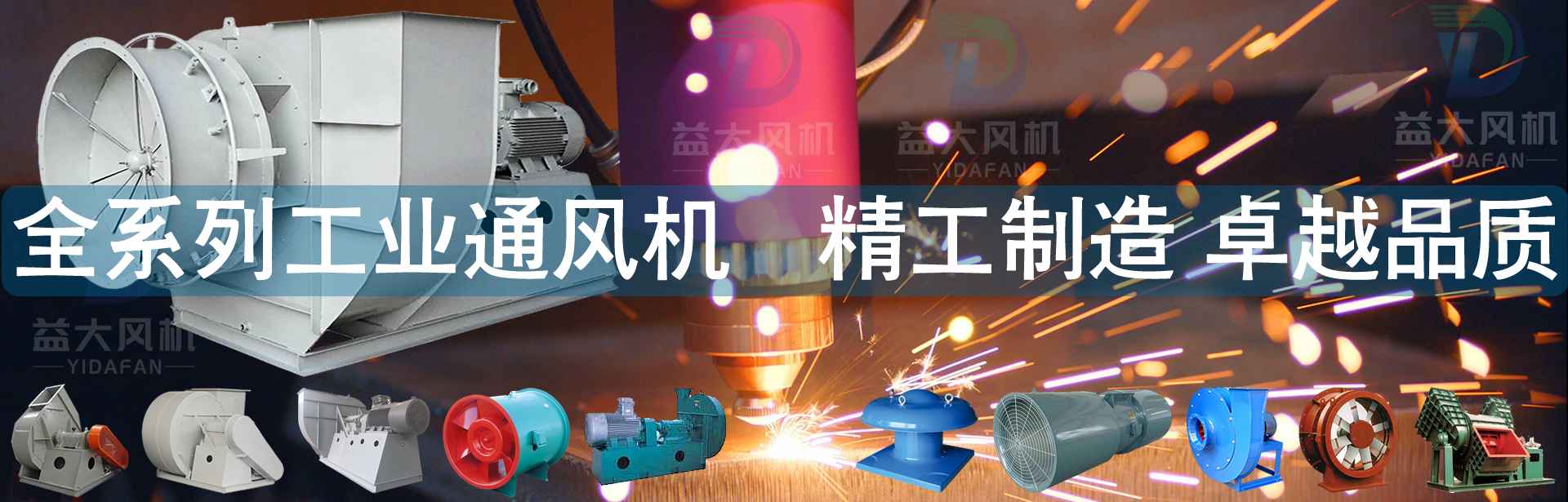

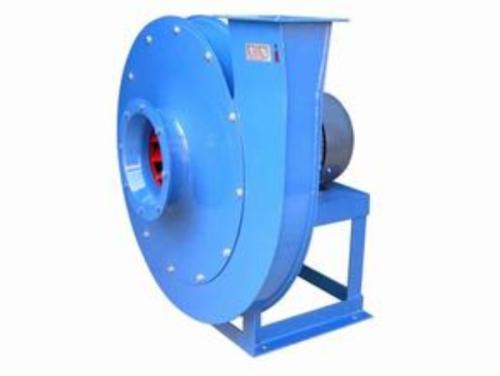
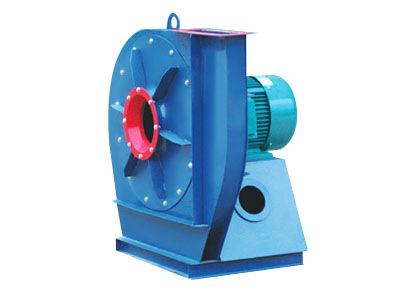
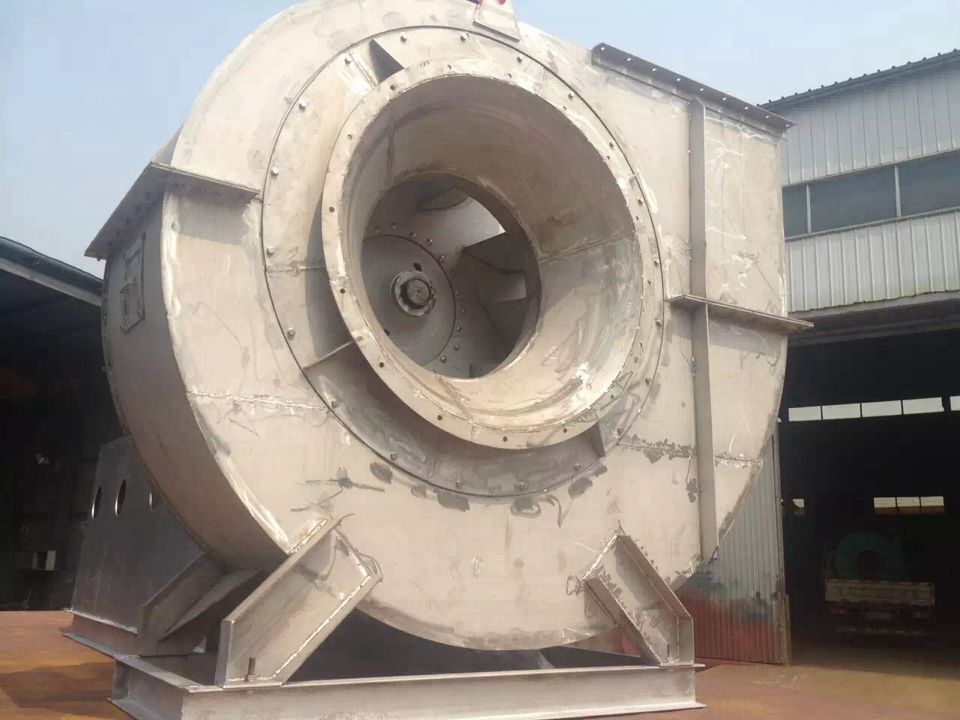
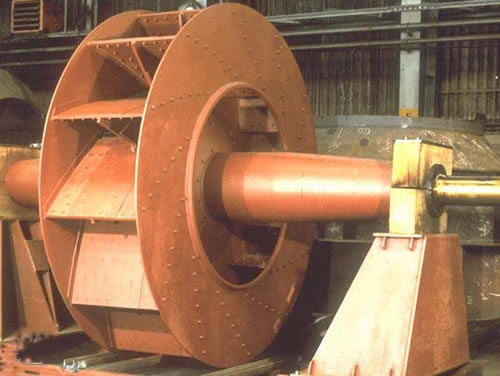
300 C is the entry level of high temperature induced draft fans. The task here is not to change to a heat resistant steel but to keep heat away from the bearings: Q235B carbon steel with an inorganic heat resistant coating is sufficient, and the emphasis is on insulation and cooling design.
Below 300 C carbon steel retains adequate strength, so selection focuses on surface protection and thermal separation rather than on alloy content.
| Location | Material / process | Basis |
| Impeller and casing | Q235B carbon steel (GB/T 700) | Stable strength up to 300 C at moderate cost |
| Surface treatment | Inorganic heat resistant primer with silicone topcoat | Limits oxidation scaling at 300 C |
| Bearing assembly | Standard bearing housing with external cooling wheel | Prevents heat transfer through the shaft |
| Insulation | 50 mm rock wool over the casing | Lowers casing skin temperature |
| Clearance | Radial clearance set for thermal growth | Avoids rubbing at operating temperature |
| Location | Material / process | Basis |
| Bearing housing outside the hot zone | Extended shaft moves the bearings away from the casing | Keeps bearing temperature in range |
| Cooling wheel on the shaft | Fins create an air film along the shaft | Reduces heat conduction to the bearings |
| Balancing to G6.3 | Static and dynamic balancing per GB/T 9239.1 | Covers slight distortion after heating |
| Sliding support | One fixed foot and one sliding foot | Releases axial thermal growth |
| Removable insulation | Insulation supplied in removable sections | Allows weld and impeller inspection |
Applications include baking and drying ovens, paint curing lines, food and herbal drying and printing dryers in the 200 to 300 C range.
The medium is usually hot air or low dust flue gas, so insulation rather than exotic material gives the better return.
Casing insulation is best made removable so that welds and impeller wear can be inspected without stripping the whole casing.
| Standard | Title | Purpose |
| GB/T 1236 | Industrial fans - Performance testing using standardized airways | Air flow, pressure and efficiency testing |
| GB/T 9239.1 / ISO 21940-11 | Mechanical vibration - Balance quality requirements for rigid rotors | Impeller balancing grade |
| JB/T 10563 | General purpose centrifugal fans - Technical specifications | General technical conditions and works acceptance |
| GB/T 2888 | Methods of noise measurement for fans and blowers | Noise measurement and acceptance |
| GB/T 3235 | Fans - Basic types, dimensions, parameters and performance curves | Impeller type and performance curve |
Impeller size, air flow, pressure and motor power are calculated for the actual duty. Please provide medium temperature, dust load and available space.
Yes. Q235B retains sufficient strength at 300 C when combined with an inorganic heat resistant coating and casing insulation. If the medium contains sulphur or moisture, a higher grade or a protective coating is recommended.
Blades distort when they reach 300 C, which changes the mass distribution. Balancing to G6.3 per GB/T 9239.1 keeps vibration from rising as the fan runs.
Check whether the bearing housing is outside the hot zone, whether the cooling wheel is effective and whether the grease is rated for the temperature. A water jacket or oil circulation unit may be needed.
Related pages:
Contact: Lee
Phone: 13793313126
Tel: 0533-6820280
Email: chuanyi99@126.com
Add: Wujia Industrial Park, Nanjiao Town, Zhoucun District, Zibo City, Shandong Province, China