Language:


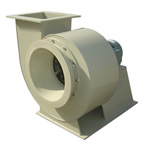
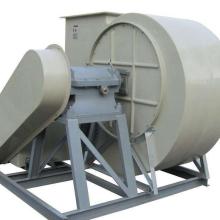
Sodium hydroxide is a strong alkali whose corrosion behaviour differs from acids: it attacks amphoteric metals such as aluminium and zinc, and hot concentrated lye causes stress corrosion cracking in carbon steel and austenitic stainless steel. The fan wetted parts are made from 304, 316L, nickel alloy or FRP / PP non-metallic materials, and high-stress carbon steel members are avoided.
Alkali corrosion follows two main lines: dissolution of amphoteric metals and stress corrosion cracking. Selection starts by fixing concentration, temperature and whether evaporation crystallisation or high temperature is present.
| Location | Material / process | Basis |
| Ambient dilute lye | 304 / 316L stainless steel | Alkali resistant at low temperature and concentration; no amphoteric metal |
| Higher temperature or concentration | 316L or duplex | Resists uniform corrosion; avoids high-stress carbon steel |
| Hot concentrated lye | Nickel alloy or FRP / PP | Avoids stress corrosion cracking and hot alkali attack |
| Impeller | Stainless steel, nickel alloy or PP / FRP, integrally formed | Wetted parts in direct contact with alkali mist |
| Sealing | Fluoroelastomer or EPDM seal | Resists alkali and stops mist leakage |
| Location | Material / process | Basis |
| Stress control | Avoid high-stress carbon steel and control weld residual stress | Prevents stress corrosion cracking in hot lye |
| No amphoteric metal | Aluminium, zinc and galvanised parts kept off wetted areas | Alkali reacts with amphoteric metals |
| Weld treatment | Post-weld grinding and residual stress relief | Reduces caustic embrittlement zones |
| Drain and wash | Low point drain and wash connection | Limits lye evaporation crystallisation and residue |
| Motor isolation | Anti-corrosion baffle between motor and casing | Protects motor insulation and isolates alkali mist |
Chlor-alkali electrolysis, pulp and paper, alumina production, textile mercerising, detergent and soap saponification and water treatment pH adjustment, wherever sodium hydroxide or alkali mist is handled.
Lye concentration rises on evaporation and crystallised deposits increase local attack, so liquid pooling and dead corners must be avoided.
Hot concentrated lye risks stress corrosion cracking in carbon steel and austenitic stainless steel, so material and welding stress are assessed together. Where acid is also present, the lye selection rules no longer apply.
| Standard | Title | Purpose |
| HG/T 20679 | Design code for external anti-corrosion of chemical equipment and piping | Anti-corrosion design for chemical media |
| ISO 12944-5 | Paints and varnishes - Corrosion protection of steel structures by protective paint systems - Part 5 | Coating system and durability class |
| GB/T 3854 | Barcol hardness test for reinforced plastics | Hardness acceptance of FRP parts |
| GB/T 1236 | Industrial fans - Performance testing using standardized airways | Air flow, pressure and efficiency testing |
| GB/T 9239.1 / ISO 21940-11 | Mechanical vibration - Balance quality requirements for rigid rotors | Impeller balancing grade |
Please provide the sodium hydroxide concentration range, medium temperature, whether evaporation crystallisation occurs and the air flow. Size and motor power are calculated for the actual duty.
Aluminium and zinc are amphoteric metals that dissolve in sodium hydroxide, and zinc coatings are attacked in the same way. Wetted parts use 304, 316L, nickel alloy or FRP / PP instead.
Hot concentrated lye causes stress corrosion cracking in carbon steel and austenitic stainless steel, and high-stress members crack first. Nickel alloy or non-metallic materials are used with controlled weld residual stress.
Welds, impeller roots and low point liquid pockets. Evaporation crystallisation deposits corrode first, so establish the interval during the first year through visual inspection and thickness measurement.
Related pages: Anti-corrosion fan range PP plastic fan Rubber and plastic lined fan
Contact: Lee
Phone: 13793313126
Tel: 0533-6820280
Email: chuanyi99@126.com
Add: Wujia Industrial Park, Nanjiao Town, Zhoucun District, Zibo City, Shandong Province, China