Language:


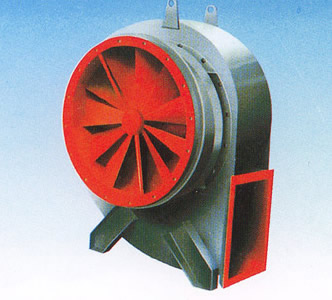
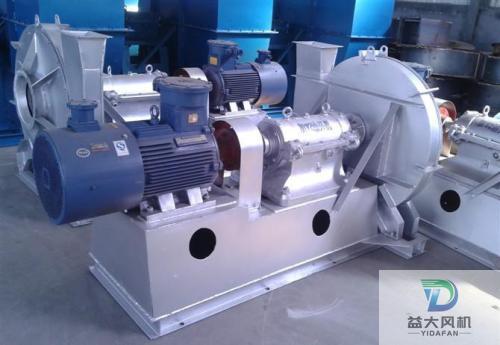
Hydrofluoric acid reacts with glass phases, silica and most metals, so its corrosion behaviour is unlike that of ordinary acids. Glass reinforced plastic and silica-bearing ceramics are attacked by hydrofluoric acid, and the fan wetted parts are made from Monel alloy or PTFE / PVDF lining instead.
Hydrofluoric acid attacks glass phases and most metals, so silica-bearing materials must be avoided.
| Location | Material / process | Basis |
| Impeller | Monel alloy or PTFE / PVDF lining | Resists hydrogen fluoride and fluoride attack |
| Casing | Carbon steel or metal frame with PTFE / PVDF lining | No GRP, which would lose its glass fibre |
| Shaft | Monel or PTFE sheathed shaft | Keeps metal out of contact with acid mist |
| Sealing | PTFE lip or mechanical seal | Resists hydrofluoric acid and stops leakage |
| Metal parts | Epoxy or vinyl ester coating | Protects bolts, base frame and non-wetted parts |
| Location | Material / process | Basis |
| Lining material | PTFE / PVDF lining, no silica-bearing material | Hydrofluoric acid attacks glass phases and silica |
| Lining anchors | Welded anchors with adhesive bonding | Prevents the lining detaching |
| Weld inspection | Visual plus penetrant or spark testing | Locates leakage points |
| Fasteners | Monel or PTFE sheathed bolts | Prevents fasteners corroding first |
| Wash down | Wash and keep dry when stopped | Limits residue standing time |
Hydrofluoric acid production, fluorochemical tail gas, glass etching, semiconductor cleaning exhaust and metal surface treatment, wherever hydrogen fluoride gases are handled.
Hydrofluoric vapour and fluoride gases become more aggressive when moisture is present, so water ingress and liquid pooling must be avoided.
Where an oxidising acid such as nitric acid is also present, the corrosion behaviour changes and the mixed medium has to be assessed on its actual composition.
| Standard | Title | Purpose |
| HG/T 20679 | Design code for external anti-corrosion of chemical equipment and piping | Anti-corrosion design for chemical media |
| GB/T 1236 | Industrial fans - Performance testing using standardized airways | Air flow, pressure and efficiency testing |
| ISO 12944-5 | Paints and varnishes - Corrosion protection of steel structures by protective paint systems - Part 5 | Coating system and durability class |
| GB/T 9239.1 / ISO 21940-11 | Mechanical vibration - Balance quality requirements for rigid rotors | Impeller balancing grade |
| JB/T 10563 | General purpose centrifugal fans - Technical specifications | General technical conditions and works acceptance |
Please provide the hydrogen fluoride concentration, medium temperature, whether moisture is present and the air flow. Size and motor power are calculated for the actual duty.
A steel lining is not a single coating. The process chain runs from grit blasting to Sa2.5, adhesive application, sheet or hot pressing, vulcanisation (autoclave or ambient), spark testing, thickness measurement, to flange turn-up and weld treatment. A failure at any step shows up later as blistering, debonding or a local perforation.
Hydrofluoric acid attacks glass and ceramics, so PTFE-lined construction is the main lining route; PP-lined and PE-lined options suit only low concentration ambient duty, and rubber lining depends on the rubber grade and concentration.
| Lining type | Base and lining | Typical temperature | Media and process notes |
| Rubber lining | Steel + natural or butyl rubber | Usually up to 80 C | Dilute acids and abrasion; sheet applied after blasting, autoclave cured |
| Plastic lining | Steel + PP, PE or PVDF | Commonly 60 to 120 C | Acids, alkalis and salts; hot pressed or loose lined, flanged seal |
| PP-lined | Carbon steel + polypropylene | Commonly up to 100 C | Acids, alkalis and salts; sheet or roll lining, double welded seams |
| PE-lined | Carbon steel + polyethylene | Commonly 60 to 70 C | Abrasion and low temperature; ambient solids bearing media |
| PTFE-lined | Carbon steel + PTFE | Commonly -180 to 260 C | Strong acids, alkalis and oxidisers; isostatic or loose lining, flanged seal |
| Natural rubber lining | Carbon steel + natural rubber | Commonly up to 70 C | Dilute acids and solids; bond strength checked after cure |
| Butyl rubber lining | Carbon steel + butyl rubber | Commonly up to 90 C | Good gas tightness and weathering; suitable for gas bearing media |
Concentration, temperature, solids content and oxidising components should be written into the technical agreement. After lining, the fan is performance tested to GB/T 1236, balanced to GB/T 9239.1, and the lining is spark tested and thickness checked.
Hydrofluoric acid reacts with the silica in glass fibre and with glass phases, so GRP loses strength; silica-bearing ceramics are attacked in the same way. Monel alloy or PTFE / PVDF lining is used for this duty.
Monel suits anhydrous or low moisture, low temperature hydrogen fluoride and can be made into an integral impeller. Where moisture is present or temperature is higher, PTFE or PVDF lining is usual, and the two are often combined.
A PTFE mechanical or lip seal stops acid mist escaping along the shaft, the lining uses welded anchors with adhesive bonding, and penetrant or spark testing locates weld leaks.
Related pages: Anti-corrosion fan range Rubber and plastic lined fan F9-19 anti-corrosion centrifugal fan
Contact: Lee
Phone: 13793313126
Tel: 0533-6820280
Email: chuanyi99@126.com
Add: Wujia Industrial Park, Nanjiao Town, Zhoucun District, Zibo City, Shandong Province, China