Language:




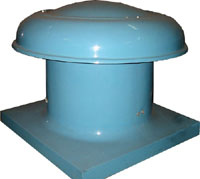
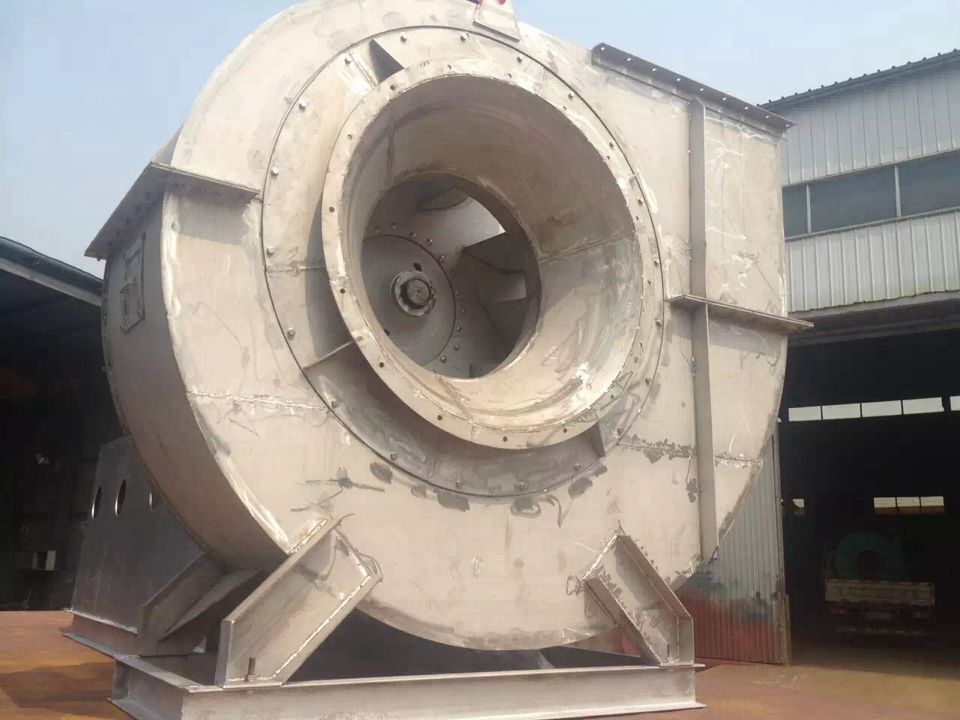
900 C approaches the scaling limit of conventional austenitic stainless steel. Grade 310S or 253MA is used with an aluminium diffusion and pre-oxidation treatment, while the drive moves to a circulating oil unit so that water cooling and forced lubrication keep the bearings within range.
At this level surface treatment and cooling design matter as much as the base grade.
| Location | Material / process | Basis |
| Impeller and casing | 06Cr25Ni20 or 253MA type heat resistant stainless | Higher creep and scaling resistance required |
| Surface treatment | Aluminium diffusion followed by pre-oxidation | Extends the scaling life |
| Bearing assembly | Water cooled housing with oil circulation unit | Positive cooling and stable lubrication |
| Insulation | 100 mm ceramic fibre with composite lining | Brings wall temperature within the material limit |
| Instrumentation | Thermocouples at inlet and casing | Enables over-temperature alarm and interlock |
| Location | Material / process | Basis |
| Composite lining | Ceramic fibre with lightweight insulating brick | Better insulation and anchor protection |
| Shaft thermal sleeve | Insulation sleeve, cooling medium if required | Controls the temperature gradient |
| Expansion joints and sliding feet | Sized for the full 900 C growth | Releases thermal stress |
| Infrared inspection | Periodic measurement during operation | Finds local hot spots and lining damage |
| Over-temperature interlock | Alarm and trip settings | Protects the fan from process upsets |
Typical duties are yellow phosphorus tail gas, carbon roasting furnaces, submerged arc furnace gas and lime kilns.
Yellow phosphorus tail gas is hot and carries phosphorus and fluorine compounds, so material and lining must address high temperature and chemical attack together.
An over-temperature alarm and interlock, with sensors at the fan inlet and in the casing hot zone, allows abnormal conditions to be found early.
| Standard | Title | Purpose |
| GB/T 20878 | Stainless and heat-resisting steels - Designation and chemical composition | High temperature and corrosion resistant grades |
| GB/T 3003 | Refractory fibres and products | High temperature lining material and acceptance |
| GB/T 12777 | General specification for metal bellows expansion joints | Expansion compensation for hot ducts and casing |
| GB/T 1236 | Industrial fans - Performance testing using standardized airways | Air flow, pressure and efficiency testing |
| GB/T 9239.1 / ISO 21940-11 | Mechanical vibration - Balance quality requirements for rigid rotors | Impeller balancing grade |
Please provide gas composition, temperature, dust load and air flow. Fan size and motor power are calculated for the actual duty.
Yes, but the oxide layer grows faster. Aluminium diffusion and pre-oxidation extend the scaling life, and inspection intervals should be shortened accordingly.
Under the radiant load at 900 C, grease lubrication alone is not stable. The oil circulation unit handles lubrication and heat removal while water cooling isolates the heat source.
The gas is hot and its composition differs from ordinary flue gas, combining high temperature oxidation with specific chemical attack. Material and lining must be evaluated for the actual gas composition rather than copied from another industry.
Related pages:
Contact: Lee
Phone: 13793313126
Tel: 0533-6820280
Email: chuanyi99@126.com
Add: Wujia Industrial Park, Nanjiao Town, Zhoucun District, Zibo City, Shandong Province, China