Language:



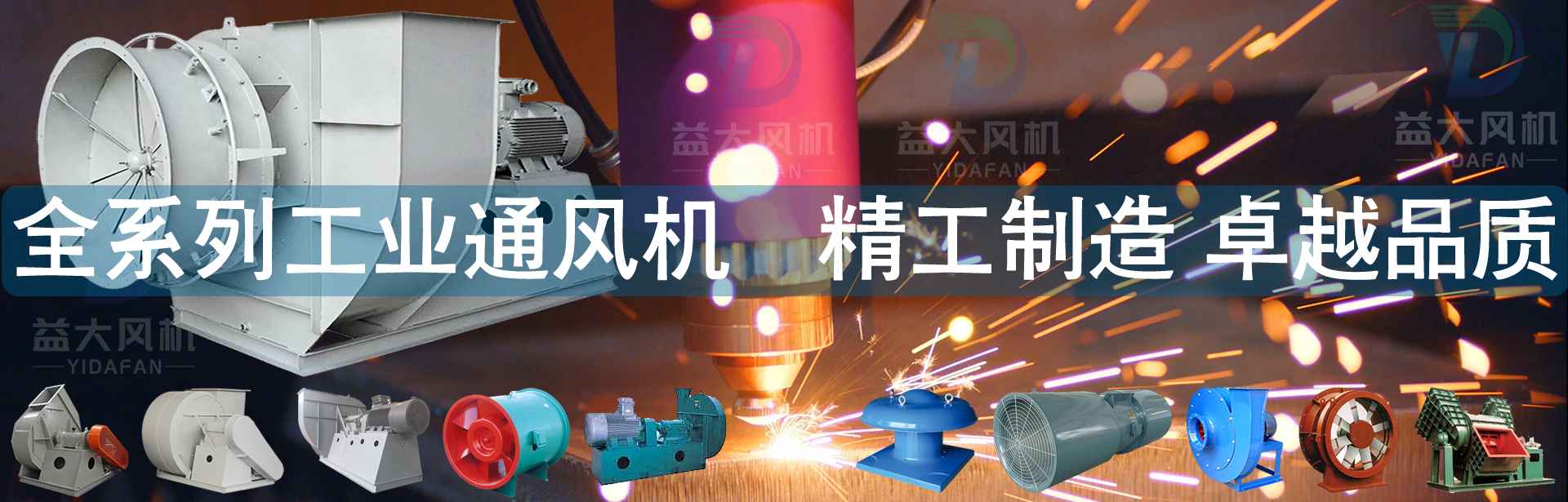

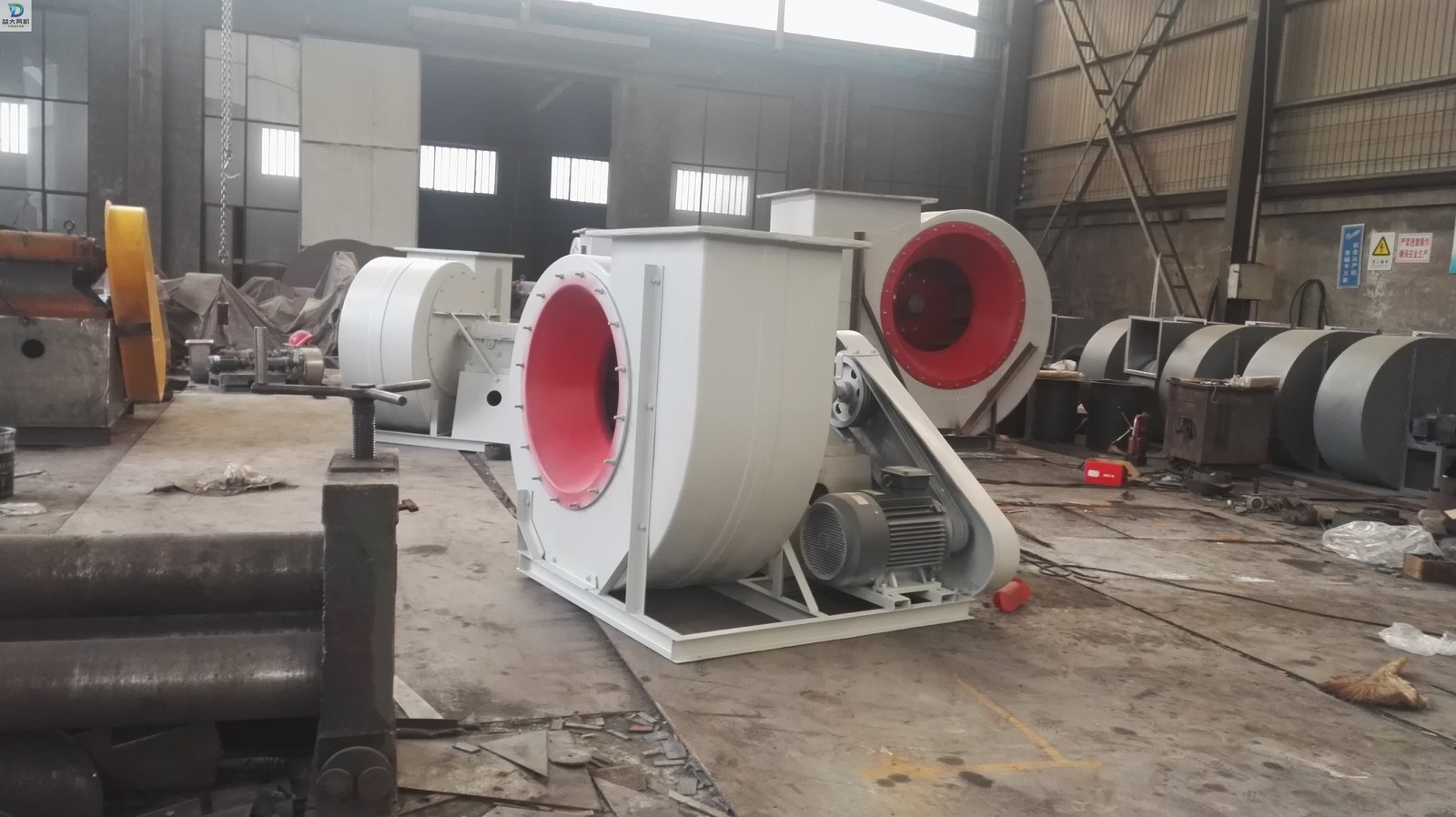
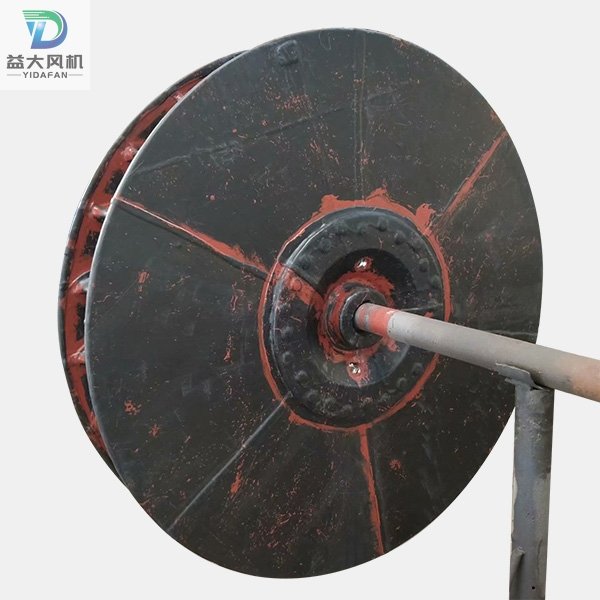
A 904L centrifugal fan uses a super-austenitic stainless steel, commonly identified as UNS N08904 or EN 1.4539. High nickel, about 4–5% molybdenum and copper make it more suitable for sulphuric acid, phosphoric acid, acetic acid and some chloride-bearing acids.
Grade selection still depends on concentration, temperature, impurities, moisture, condensation and abrasion. The ordered grade and mill certificate must be confirmed.
904L is austenitic and relies on a continuous passive film. Annealed strength is close to 316L; it is selected for corrosion control, not wear or high-temperature strength.
| Property | Typical characteristic | Selection meaning |
| Composition | Cr 19–23%, Ni 23–28%, Mo 4–5%, Cu 1–2% | Confirm grade and certificate |
| Structure and strength | Austenitic; useful ductility and formability | Suits welded impellers and casings |
| Corrosion | Usually better pitting and crevice resistance than 316L | Deposits and concentration still matter |
| Temperature | Mainly aqueous acid and acid-mist service | Not a heat-resistant alloy |
904L is useful in chloride-bearing acid service but costs more, offers limited wear resistance and does not replace a high-temperature alloy.
| Item | Use condition | Failure boundary |
| Chloride-bearing acids | Verified concentration and temperature window | Hot concentrated chloride and crevices can still attack |
| Sulphuric, phosphoric and organic acids | Impurities, oxidants and solids controlled | Mixed or hot concentrated acid changes the rate |
| Fabrication | Matched consumables and qualified weld procedure | High heat input or contamination can cause local attack |
| Particulate matter | Low loading and controlled velocity | Erosion removes the passive film |
Welds, gasket crevices, impeller roots, low-point traps and deposits are likely failure locations.
Screen the combined medium, concentration, temperature and impurity package; this table is preliminary.
| Medium | Common window | Boundary |
| Sulphuric acid | Dilute to medium concentration at ambient to moderate temperature | Hot concentrated or evaporating acid requires review |
| Phosphoric acid | Thermal-process or low-impurity acid and mist | Fluoride, chloride and solids narrow wet-process use |
| Acetic and formic acid | Aqueous, low-chloride acid | Anhydrous, hot or concentrated acid needs review |
| Hydrochloric acid and chlorides | Limited dilute, near-ambient duty | Hot concentrated or oxidizing mixed acid is not general use |
| Oxidants and bleaches | Review each chemical | Do not extend the sulphuric-acid conclusion |
| Solvents and solids | Low activity or low loading, controlled velocity | Active halogens or heavy abrasion need another design |
Shutdown cooling, wash residue and overnight condensation can create concentrated droplets from vapour service.
| Process | Control | Purpose |
| Material and forming | Check heat number and certificate; limit cold work | Avoid grade mix-up and cracking |
| Welding | Clean joint, matched consumables, controlled heat input | Limit local corrosion |
| Solution treatment | When required, commonly about 1100–1150°C followed by rapid cooling | Restore uniform structure |
| Surface | Remove heat tint, spatter and iron; pickle and passivate | Restore passive film |
| Structure and flanges | Remove dead corners, protect sealing faces, provide drainage | Reduce crevices and liquid retention |
| Inspection | Dimensions, welds, specified NDT, balancing and performance | Confirm integrity and stability |
Typical duties include chemical off-gas, pickling and metal finishing, phosphate fertiliser and phosphoric acid, chloride-bearing acid mist, organic-acid evaporation and liquid-waste treatment.
For concentrated hydrochloric or hydrofluoric acid, strong oxidants, salt scale or heavy abrasion, compare higher alloys, duplex steel or non-metallic lining. Flammable media also require a separate explosion-protection review.
| Reference | Title | Use |
| GB/T 20878-2024 | Stainless steels — Designation and chemical composition | Grade and composition |
| GB/T 4237-2015 | Hot rolled stainless steel plate, sheet and strip | Plate delivery requirements |
| GB/T 1236-2017 | Industrial fans — Performance testing using standardized airways | Workshop performance |
| GB/T 10178-2006 | Industrial fans — Performance testing in situ | Site verification |
| JB/T 10563-2006 | General purpose centrifugal fans — Technical conditions | Technical requirements and inspection |
The technical agreement should also define certificates, positive material identification, welding qualification, weld inspection, flange protection and rotor balancing. Size, duty and structure are project-specific.
Not as a blanket substitution. Compare concentration, temperature, chlorides, fluorides, oxidants and abrasion first. If the duty lies outside the 904L window, a higher alloy or non-metallic lining may be required.
904L is primarily a corrosion-resistant aqueous and acid-mist alloy, not a high-temperature heat-resistant grade. Hot flue gas also requires checks for strength, oxidation, dew point and chloride deposits.
Yes. Corrosion resistance does not equal wear resistance. Particles can remove the passive film, so their concentration, size, hardness and velocity should be included in the fan selection.
Related pages: Anti-corrosion fan range Sulphuric acid resistant centrifugal fan Phosphoric acid resistant centrifugal fan
Contact: Lee
Phone: 13793313126
Tel: 0533-6820280
Email: chuanyi99@126.com
Add: Wujia Industrial Park, Nanjiao Town, Zhoucun District, Zibo City, Shandong Province, China