Language:




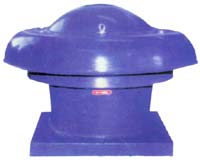
The aggressiveness of sulphuric acid is governed by concentration and temperature together. The same fan that works in 98 percent acid at ambient temperature will be destroyed by 30 percent dilute acid, so the concentration window and temperature limit must be fixed before selecting materials.
Concentrated sulphuric acid passivates carbon steel at ambient temperature, while dilute acid attacks almost all common metals.
| Location | Material / process | Basis |
| Concentrated, ambient | Carbon steel with epoxy or vinyl ester coating | Reliable while the passivating film is stable |
| Dilute acid | PP, PVDF or FRP lining | Non-metallic materials resist dilute acid |
| Severe or hot duty | Lead lining, PTFE lining or titanium | Further upgrade by concentration and temperature |
| Shaft | 316L sheathed or acid resistant alloy | Protects against acid vapour along the shaft |
| Sealing | PTFE mechanical seal | Prevents leakage and protects bearings |
| Location | Material / process | Basis |
| Concentration monitoring | Monitoring ahead of the fan | Avoids the aggressive concentration range |
| Avoid dilution | Prevent water vapour entering the stream | Dilution drives accelerated attack |
| Temperature limit | Cap the inlet temperature | Corrosion rate rises with temperature |
| Drainage | Low point drain in the casing | Prevents liquid accumulating |
| Shutdown protection | Wash and keep dry when stopped | Reduces acid attack during standstill |
Applications include sulphuric acid plant tail gas, acid making from metallurgical gas, fertiliser plants, battery charging mist and acid tank breathing.
Failure is usually pitting and weld corrosion in locally diluted zones rather than uniform thinning, so stagnant areas and dead corners must be avoided.
Where the medium also contains fluoride or chloride, the rules for sulphuric acid no longer apply and the mixed acid has to be assessed separately.
| Standard | Title | Purpose |
| HG/T 20679 | Design code for external anti-corrosion of chemical equipment and piping | Anti-corrosion design for chemical media |
| GB/T 1236 | Industrial fans - Performance testing using standardized airways | Air flow, pressure and efficiency testing |
| ISO 12944-5 | Paints and varnishes - Corrosion protection of steel structures by protective paint systems - Part 5 | Coating system and durability class |
| GB/T 9239.1 / ISO 21940-11 | Mechanical vibration - Balance quality requirements for rigid rotors | Impeller balancing grade |
| JB/T 10563 | General purpose centrifugal fans - Technical specifications | General technical conditions and works acceptance |
Please provide the concentration range, medium temperature, moisture content and air flow. Size and motor power are calculated for the actual duty.
At ambient temperature, high concentration and low moisture, carbon steel forms a ferrous sulphate film and can be used with a protective coating. If temperature rises or concentration falls, that film breaks down and non-metallic or upgraded materials are required.
Dilute acid attacks metals strongly, so PP, PVDF or FRP are the usual choice, or lead or PTFE lining. The specific grade still has to be confirmed for the actual concentration and temperature.
Corrosion rate is very sensitive to concentration, and process upsets push the equipment briefly into the aggressive range. The technical agreement should state a range rather than a single value, backed by monitoring and interlock.
Related pages: Anti-corrosion fan range PP plastic fan Rubber and plastic lined fan
Contact: Lee
Phone: 13793313126
Tel: 0533-6820280
Email: chuanyi99@126.com
Add: Wujia Industrial Park, Nanjiao Town, Zhoucun District, Zibo City, Shandong Province, China