Language:




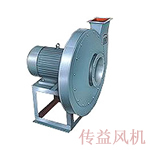
Magnesium alloy melting and refining uses fluxes such as MgCl2, KCl, BaCl2 and CaF2, so the exhaust carries both chloride and fluoride compounds. Where these occur together, ordinary stainless steel fails through chloride pitting and the material scheme has to be chosen for combined chloride and fluoride service.
Attack comes from chloride and fluoride bearing dust and from fumes released when the flux is heated.
| Location | Material / process | Basis |
| Impeller | FRP or PVDF lined impeller | Resists chloride and fluoride bearing dust |
| Casing | FRP with reinforced lining | Easy to form for large and irregular parts |
| Shaft | Duplex 2205 or sheathed 316L | Better chloride pitting resistance |
| Sealing | PTFE or fluoroelastomer seal set | Keeps dust out of the bearings |
| Lining anchors | Stiffeners with anchors | Prevents the lining detaching under dust laden flow |
| Location | Material / process | Basis |
| Dust pre-separation | Pre-separator or settling section ahead of the fan | Reduces impeller wear and deposit build up |
| Anti-sediment design | Sloping casing floor with dust outlet | Limits accumulation and caking |
| Equipotential earthing | Casing, impeller and duct bonded and earthed | Controls static build up |
| Inspection openings | Removable covers on casing and inlet | Allows lining and impeller inspection |
| Wash down | Periodic washing and drying of the interior | Reduces attack after chlorides absorb moisture |
Applications include magnesium melting and refining furnace exhaust, die casting shop ventilation, flux conveying dust collection and magnesium dust collection.
Magnesium dust is combustible, so the dust collection system also has to meet dust ignition protection requirements and both aspects must be designed together.
Where SF6 or SO2 protective gas is also used, the gas composition becomes more complex and the material and sealing scheme has to be reviewed for the actual composition.
| Standard | Title | Purpose |
| HG/T 20679 | Design code for external anti-corrosion of chemical equipment and piping | Anti-corrosion design for chemical media |
| GB/T 3854 | Barcol hardness test for reinforced plastics | Hardness acceptance of FRP parts |
| GB 12476.1 | Electrical apparatus for use in the presence of combustible dust - Part 1: General requirements | General requirements for dust ignition protected equipment |
| GB/T 1236 | Industrial fans - Performance testing using standardized airways | Air flow, pressure and efficiency testing |
| GB/T 9239.1 / ISO 21940-11 | Mechanical vibration - Balance quality requirements for rigid rotors | Impeller balancing grade |
Please provide the medium composition, dust concentration, medium temperature and air flow. Size and motor power are calculated for the actual duty.
Chloride dust releases chloride ions when it absorbs moisture, which breaks the passive film and causes pitting; fluorides also attack some grades. FRP and PVDF are therefore common, and metal parts tend towards duplex grades with better pitting resistance.
Yes. Magnesium dust is combustible, so the exhaust and dust collection system has to be designed for dust ignition protection, including motor selection, earthing and anti-sediment construction. The specific rating depends on the dust characteristics.
Lining life depends on dust concentration, moisture and the number of starts. Setting a replacement interval from visual inspection and thickness measurement during the first year is more reliable than assuming a fixed life, with anchors and welds checked first.
Related pages: Anti-corrosion fan range Explosion proof fan range Rubber and plastic lined fan
Contact: Lee
Phone: 13793313126
Tel: 0533-6820280
Email: chuanyi99@126.com
Add: Wujia Industrial Park, Nanjiao Town, Zhoucun District, Zibo City, Shandong Province, China